We are delighted to be able to present to you the solo show Nach der Krise ist vor der Krise by Oliver Ressler which runs from February 3 until April 1, 2012.
Ressler’s oeuvre is extremely heterogeneous in formal terms and embraces films, photographs, wall texts and installations – and it explores the background to economic and political crises while analyzing their active mechanisms. He avails himself of documentary and fictional strategies in order to articulate issues of social participation and demonstrate alternative areas of action.
Oliver Ressler’s art addresses the starting points and implications of the financial and economic crisis as well as the underlying flaws in the model of parliamentary democracy revealed by the crisis. As a constitutive approach within his works he opts to deliberately merge active forms of opposition and for a manifest reflective presentation of the current critical social processes.
His films and photographs focus both on the actors but also the critics of and those marginalized by the prevailing political systems. In this juxtaposition power structures become transparent and strategies for change emerge. Oliver Ressler draws attention to concepts of self-determination and possibilities of political and social change.
His works also meet with interest outside of the art debate. Certain formats that his pieces adopt remain in the artistic realm while some of his films are regularly shown at events by political groups. As such, his works are not solely disclosed via the art context and contemporary artistic debates but equally attest to his interest in political debate. They make political crises tangible and serve as a starting point for societal analyses and the question about your own political position.
Seen within the context of the complex political and economic problems facing Europe Oliver Ressler’s first large solo show in Germany seems – in Europe’s banking metropolis of Frankfurt of all places – to be an important model for presenting the reflective options of art as a critical instrument for questioning social processes.
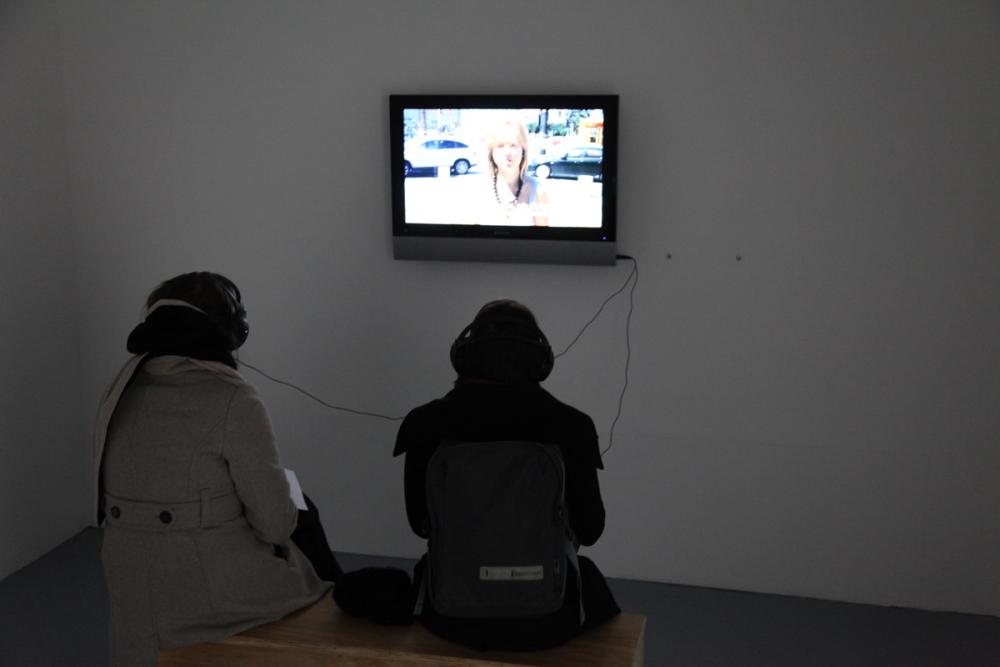
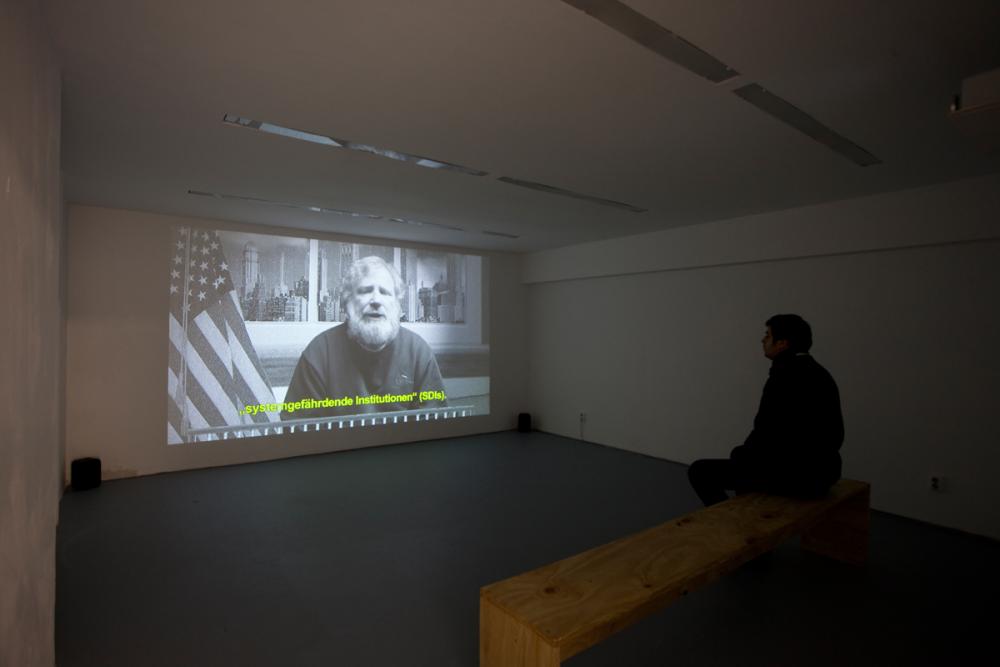
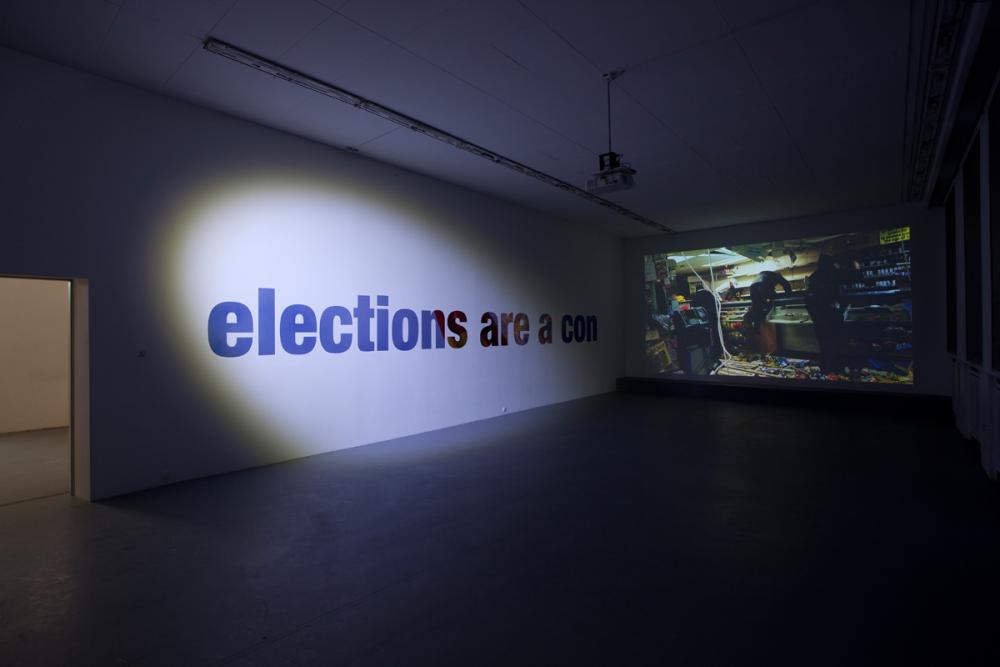
Resslers film works are often based on an interview situation in which the artist retreats as an actor so as to place the focus on the protagonists and create a platform for their concerns. Who talks plays a large role in his works. Exemplary for Ressler’s method is the film that acts as the topical starting point of the show, namely What is Democracy in which by means of interviews with activists he essentially formulates a global analysis of the deep political crisis facing the western model of democracy. Among other things this crisis is manifested in the fact that elections in parliamentary democracies increasingly become rituals devoid of meaning, while the real decisions are made outside of public debates. The wall text Elections are a Con uses striking pieces to alert us to this danger.
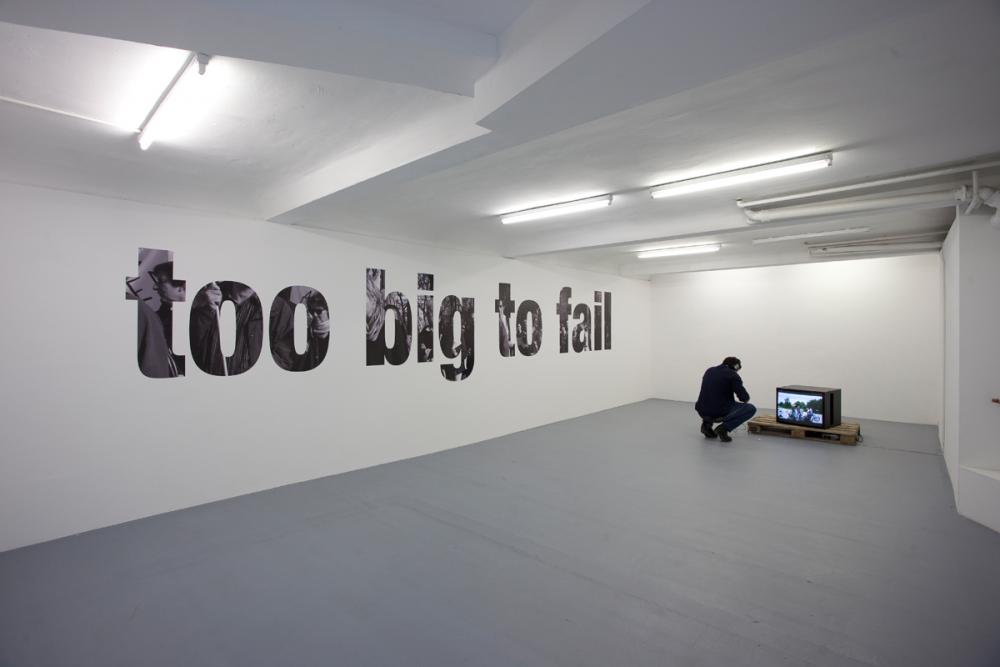
Ressler explores the handling of the financial and economic crisis and the social consequences in his films The Bull Laid Bear and Robbery. While the former examines the political and economic strategies employed in the bank bailout Robbery places the plundering by youths in 2011 in Great Britain in a causal relationship with the plundering of numerous public purses by governments. The wall text Too Big to Fail also explores the bank bailout plan. The words that are often used on a political level as legitimization for saving the banks in times of crisis are formed from a photo depicting people on a demonstration protesting “Wir zahlen nicht für eure Krise” (We won’t pay for your crisis) and points to the wish to also be “too big to fail” as a global movement.
Oliver Ressler’s artistic oeuvre also includes projects in public space. The work Resist to Exist originally conceived for urban space in Copenhagen refers to forms of re-appropriation and political intervention. With reference to the social activities of movements such as those of the Piqueteros in Argentina during the 2001 crisis means of acting within the crisis-ridden Capitalist system are shown.
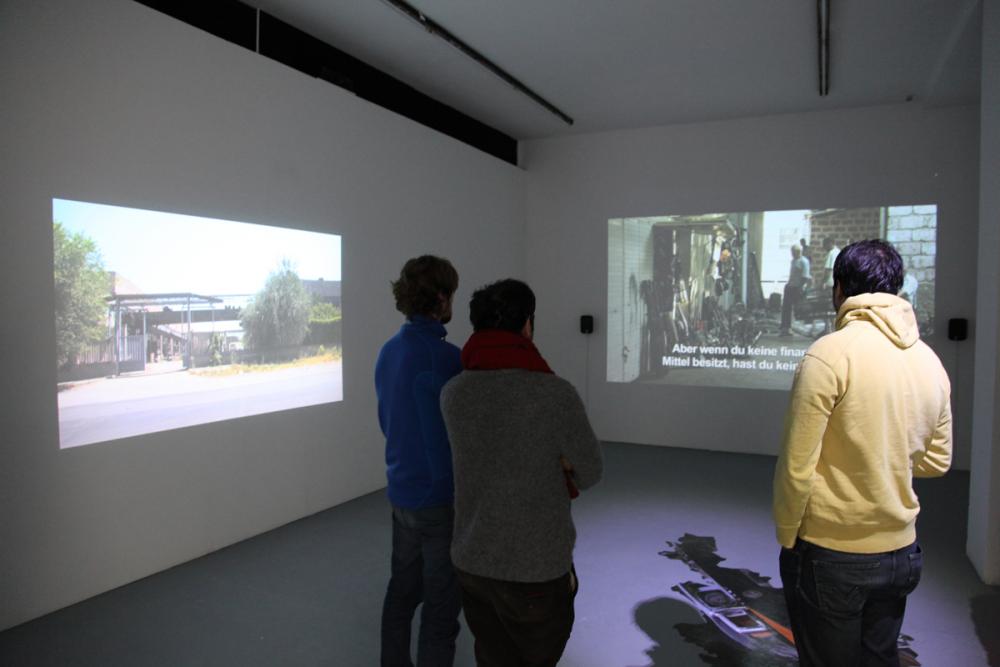
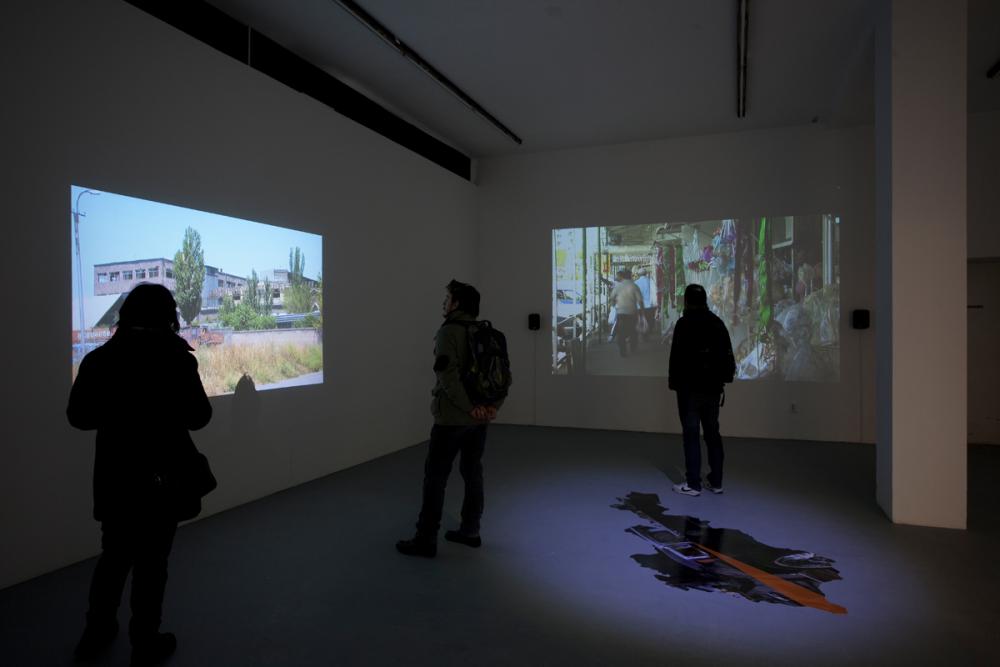
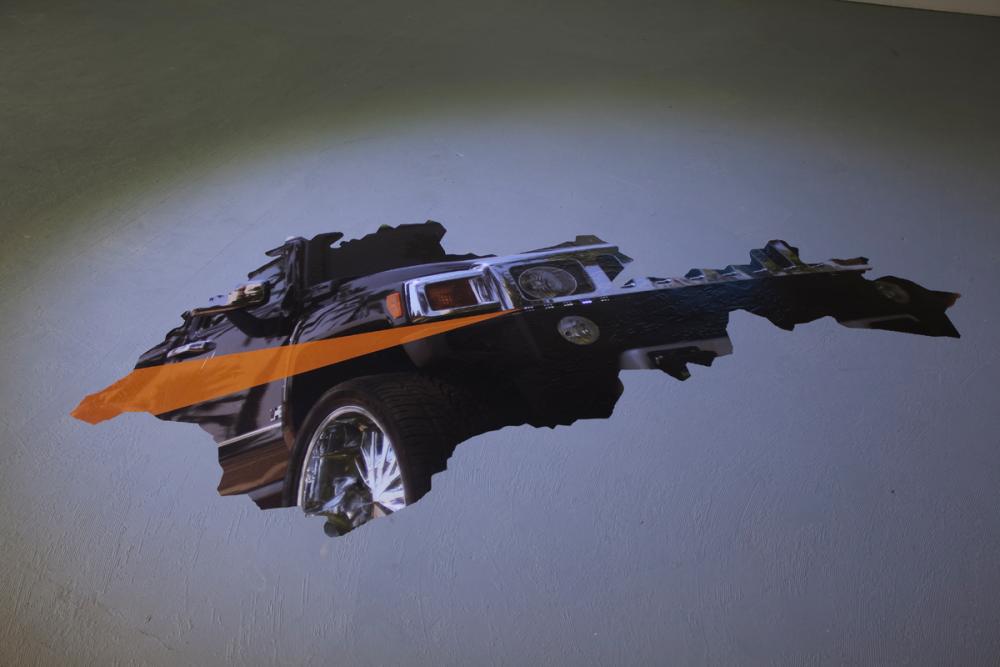
Socialism Failed, Capitalism is Bankrupt. What comes Next? addresses the precarious situation of the Armenian population. In the 2-channel video installation impoverished vendors describe their struggle to survive in the crisis, the worsening of their living conditions in the post-Soviet era and their hopes and expectations of social change.
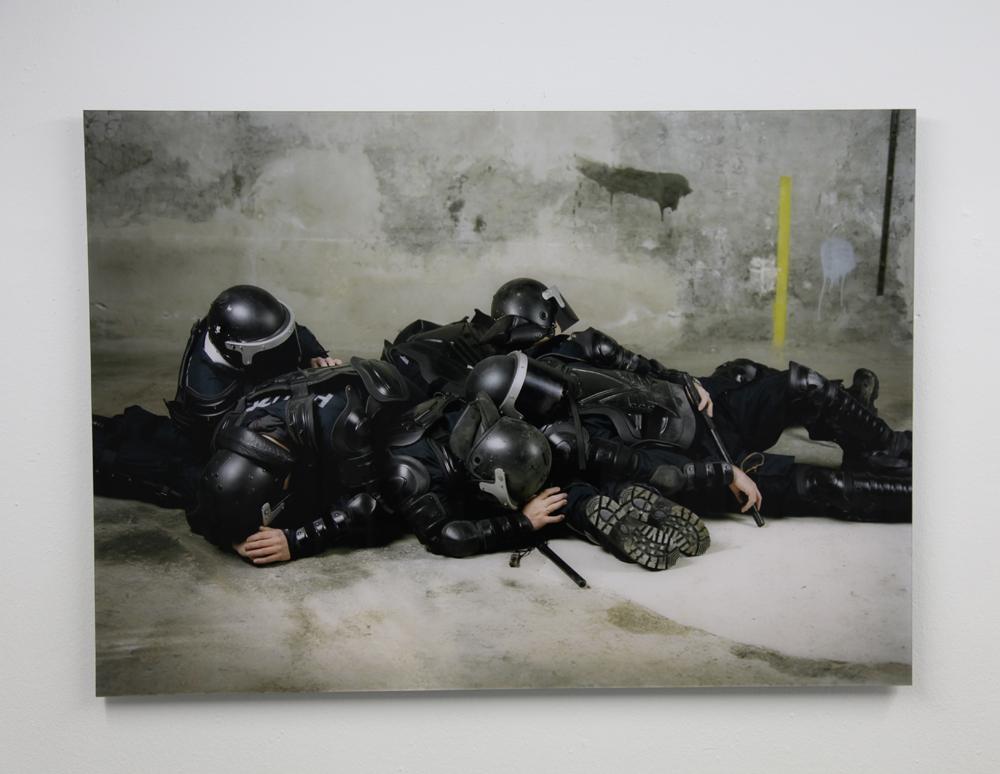
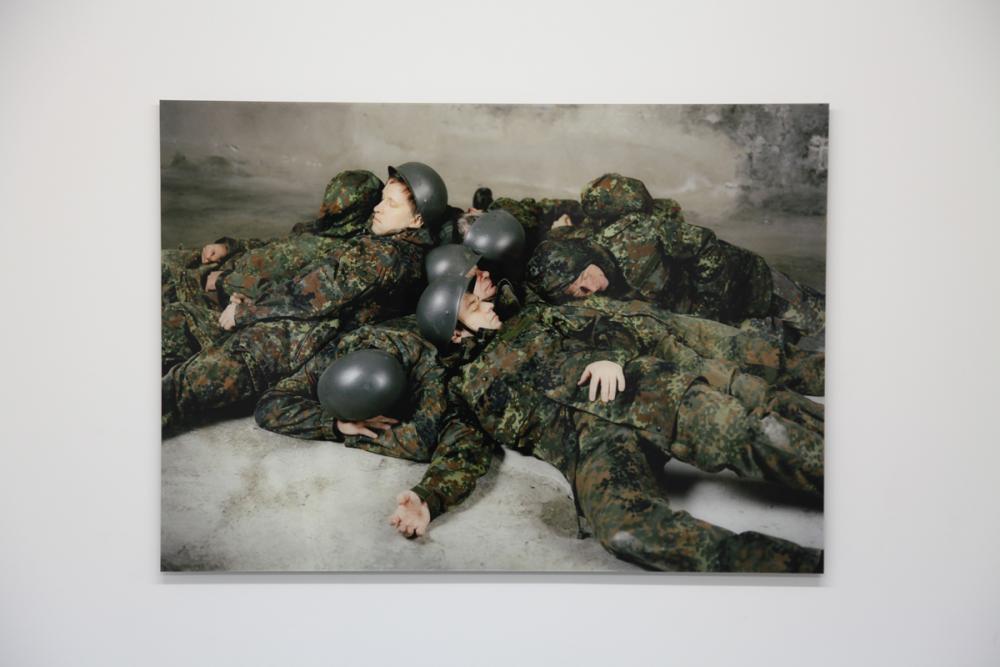
Unlike his film works Ressler’s photographs entitled We Have a Situation Here show an orchestrated scenario. Police officers, soldiers and managers lie motionless in a heap. While these actors and guardians of the existing balance of power lie stripped of their function questions arise as to whether and how an alternative system is feasible and how it can be structured.
This concept of a re-structured democracy and political autonomy is an inherent component of Ressler’s works, as the latter not only paint a picture of political and economic structures but also show how to question and alter existing orders.
In the coming years the exhibition Nach der Krise ist vor der Krise is to be continued with the addition of current works. The next stop for the project After the Crisis is before the Crisis is in Galleria Artra in Milan (curator: Marco Scotini, 28.02. – 14.04.2012).
Oliver Ressler, was born in 1970, and lives and works in Vienna. He realizes exhibitions, works in public space and makes films on subjects such as economy, democracy, racism, forms of opposition and social alternatives. His projects were shown in solo shows at the Berkeley Art Museum, USA; Platform Garanti Contemporary Art Center, Istanbul; Museum of Contemporary Art, Belgrade; Kunstraum der Universität Lüneburg; Centro Cultural Conde Duque, Madrid; Alexandria Contemporary Arts Forum, Egypt and . Ressler has participated in over 200 group exhibitions, including MASS MoCA, USA; Institute, Sao Paulo; Van Abbe Museum, Eindhoven and the biennials in Prague, Seville, Moscow, Taipei and Lyon. For the Taipei Biennial 2008 Ressler curated an exhibition on the anti-globalization movement, A World Where Many Worlds Fit, which was also shown 2010 in the Foreman Art Gallery of Bishop University in Sherbrooke, Canada.
In 2008 his book Alternative Ökonomien, alternative Gesellschaften (Alternative economies, alternative societies) was published by Promedia Verlag. In 2002 the video This is what democracy looks like! received the International Media Art Award of the ZKM.
Supported by

Opening hours
tuesday- friday
11:00 - 19:00
saturday, sunday
12:00 - 18:00
Guided tours
- March 8th 2012, 18:00 Uhr
- March 22nd 2012, 18:00 Uhr
Die formal äußerst heterogene künstlerische Praxis Resslers, die Filme, Fotografien, Wandtexte und installative Arbeiten umfasst, befragt die Hintergründe ökonomischer und politischer Krisen und analysiert deren Wirkmechanismen.
Er bedient sich dokumentarischer und fiktionaler Strategien, um Fragen gesellschaftlicher Teilhabe und ökonomischer Gerechtigkeit zu artikulieren und alternative Handlungsräume aufzuzeigen.
Wir freuen uns, vom 3. Februar bis zum 1. April 2012 die Einzelausstellung Nach der Krise ist vor der Krise von Oliver Ressler präsentieren zu können.
Oliver Resslers Kunst thematisiert die Ausgangspunkte und Folgen der Finanz- und Wirtschaftskrise und der dabei zutage tretenden grundlegenden Schwäche des repräsentativen Demokratiemodells. Als konstitutiver Ansatz innerhalb seiner Arbeiten werden die bewusste Engführung von aktiven Handlungsformen des Widerstands und die reflexive Präsentation der aktuellen krisenhaften gesellschaftlichen Prozesse sichtbar.
Seine Filme und Fotografien fokussieren sowohl auf die AkteurInnen als auch die KritikerInnen und Prekarisierten des herrschenden politischen Systems. In dieser Gegenüberstellung werden Machtstrukturen transparent und Strategien zur Veränderung sichtbar. Oliver Ressler macht auf Konzepte der Selbstbestimmung und Möglichkeiten der politischen und gesellschaftlichen Veränderung aufmerksam.
Auch außerhalb des Kunstdiskurses stoßen seine Arbeiten auf Interesse. Bestimmte Formate, die seine Arbeiten annehmen können, verbleiben im künstlerischen Feld, während einige seiner Filme z. B. regelmäßig bei Veranstaltungen politischer Gruppierungen gezeigt werden. Seine Arbeiten erschließen sich somit nicht ausschließlich über den Kunstkontext und über zeitgenössische künstlerische Diskurse, sondern ebenso über das Interesse an einer politischen Auseinandersetzung. Sie machen politische Krisen greifbar und dienen als Ausgangspunkt gesellschaftlicher Analysen und der Frage nach der eigenen politischen Verortung.
Im Kontext der vielschichtigen politischen und ökonomischen Probleme Europas erscheint die erste große Einzelausstellung Oliver Resslers in Deutschland - gerade in der europäischen Bankenmetropole Frankfurt am Main - als wichtiges Modell, die reflexiven Möglichkeiten der Kunst als kritisches Instrument der Befragung gesellschaftlicher Prozesse in Szene zu setzen.
Resslers filmischen Werken liegt oft eine Interviewsituation zugrunde, wobei der Künstler sich selbst als Akteur zurücknimmt, um den Fokus auf die ProtagonistInnen selbst zu legen und eine Plattform für deren Anliegen herzustellen. Wer spricht, spielt in seinen Arbeiten eine große Rolle. Beispielhaft für Resslers Methode ist der als inhaltlicher Ausgangspunkt der Ausstellung fungierende Film What is Democracy, in dem anhand von Interviews mit AktivistInnen eine Art globale Analyse über die tiefe politische Krise des westlichen Demokratiemodells formuliert wird. Diese Krise wird unter anderem darin ersichtlich, dass Wahlen in den parlamentarischen Demokratien immer mehr zu sinnentleerten Ritualen werden, während die wirklichen Entscheidungen abseits öffentlicher Debatten gefällt werden. Der Wandtext Elections are a Con verweist eindringlich auf diese Gefahr.
Den Umgang mit der Finanz- und Wirtschaftskrise sowie deren gesellschaftliche Konsequenzen thematisiert Ressler in seinen Filmen The Bull Laid Bear und Robbery. Während ersterer den politischen und ökonomischen Strategien der Bankenrettung nachgeht, stellt Robbery die Plünderungen der Jugendlichen 2011 in Großbritannien mit den Plünderungen zahlreicher Staatskassen durch Regierungen in einen kausalen Zusammenhang. Auch der Wandtext Too Big to Fail beschäftigt sich mit der Bankenrettung. Die Worte, die auf politischer Ebene oftmals als Legitimation für die Rettung der Banken in Krisenzeiten genutzt werden, sind aus einem Foto gebildet, das Menschen auf einer Demonstration unter dem Motto Wir zahlen nicht für eure Krise zeigt und verweist auf den Wunsch, als globale Bewegung ebenfalls systemrelevant zu werden.
Zu Oliver Resslers künstlerischer Praxis gehören auch Projekte im öffentlichen Raum. Die ursprünglich für den urbanen Raum in Kopenhagen entwickelte Arbeit Resist to Exist verweist auf Formen der Wiederaneignung und politischen Intervention. In Bezugnahme auf soziale Praxen von Bewegungen wie die der Piqueteros in Argentinien während der Krise 2001 wird auf Handlungsmöglichkeiten innerhalb des krisenhaften kapitalistischen Systems verwiesen.
Socialism Failed, Capitalism is Bankrupt. What comes Next? thematisiert die Prekarisierung der Bevölkerung in Armenien. In der 2-Kanal-Video Installation beschreiben verarmte HändlerInnen ihren Überlebenskampf in der Krise, die Verschlechterungen ihrer Lebensbedingungen in der post-sowjetischen Ära und ihre Hoffnungen und Erwartungen auf einen sozialen Wandel.
Im Unterschied zu den filmischen Arbeiten zeigen Resslers Fotografien mit dem Titel We Have a Situation Here ein gestelltes Szenario. Polizisten, Soldaten und Manager liegen regungslos arrangiert auf einem Haufen. Während diese Akteure und Hüter der bestehenden Machtverhältnisse funktionslos darniederliegen, werden Fragen laut, ob und wie eine alternative Ordnung möglich ist und wie diese aufgebaut werden kann.
Jene Vorstellung von einer neu strukturierten Demokratie und einer politischen Autonomie sind inhärenter Bestandteil von Resslers Arbeiten, denn sie zeigen nicht nur ein Bild politischer und ökonomischer Strukturen auf, sondern auch Möglichkeiten, bestehende Ordnungen zu hinterfragen und zu verändern.
Die Ausstellung Nach der Krise ist vor der Krise soll um aktuelle Arbeiten ergänzt in den kommenden Jahren weitergeführt werden. Die nächste Station des Projektes ist unter dem Titel After the Crisis is before the Crisis die Galleria Artra in Mailand (Kurator: Marco Scotini, 28.02. – 14.04.2012).
Oliver Ressler, geboren 1970, lebt und arbeitet in Wien und führt Ausstellungen, Arbeiten im Außenraum und Filme zu Themen wie Ökonomie, Demokratie, Rassismus, Widerstandsformen und gesellschaftliche Alternativen durch. Seine Projekte wurden in Einzelausstellungen im Berkeley Art Museum, USA; Platform Garanti Contemporary Art Center, Istanbul; Museum of Contemporary Art, Belgrad; Kunstraum der Universität Lüneburg; Centro Cultural Conde Duque, Madrid; Alexandria Contemporary Arts Forum, Ägypten und Bunkier Sztuki Contemporary Art Gallery, Krakau gezeigt. Ressler nahm an mehr als 200 Gruppenausstellungen teil, darunter im MASS MoCA, USA; Itaú Cultural Institute, Sao Paulo; National Museum of Contemporary Art, Athen; Van Abbe Museum, Eindhoven und an den Biennalen in Prag, Sevilla, Moskau, Taipei und Lyon. Für die Taipei Biennale 2008 kuratierte Ressler eine Ausstellung über die Anti-Globalisierungsbewegung, A World Where Many Worlds Fit, die außerdem 2010 in der Foreman Art Gallery der Bishop University in Sherbrooke, Kanada gezeigt wurde.
2008 erschien im Promedia Verlag sein Buch Alternative Ökonomien, alternative Gesellschaften. Das Video This is what democracy looks like! wurde 2002 mit dem Internationalen Medienkunstpreises des ZKM ausgezeichnet.
Mit freundlicher Unterstützung von: